
Automotive restraint systems — engineered components Call +91 9920638354 info@autogleam.in

Quality & safety / Reference

What “quality”
has to mean on
a restraint part.

This page explains how we think about seat belt quality, why correct application matters as much as manufacture, and what we deliberately do not claim.

Subject  Automotive restraint components Sections  Eight Audience  Owners, workshops, fleets, buyers
Driver at the wheel in wet weather with the seat belt worn across the shoulder
REF Q1 The belt at work — ordinary conditions, every journey

Quality and safety reference sections

1.0
Why quality matters

Why seat belt quality matters

A seat belt is one of the very few components in a vehicle that spends its whole life doing almost nothing, and then has to work perfectly on the one occasion it is genuinely needed. There is no warm-up, no second attempt and usually no warning.

That changes what quality means. On most parts, quality is about longevity or refinement. On a restraint component, it is about behaving identically every single time — latching the same way, holding the same way, releasing the same way — for years, in heat, dust, humidity and daily handling.

Because the failure mode is invisible until it matters, quality cannot be judged by appearance. A poorly made belt and a well-made one usually look the same in the vehicle. The difference lies in the material that was accepted, the way the assembly was put together, and whether anyone checked properly before it was despatched.
2.0
Correct application

Correct application

A well-manufactured belt fitted in the wrong place is not a safe belt. Application is not a secondary consideration to manufacturing quality — it sits alongside it.

Application covers the seating position, the anchor points available in the vehicle, the length and travel the belt needs, and the geometry of how the webbing runs across the occupant. A three-point belt whose upper anchorage sits too low or too far back does not hold the occupant the way its design intended, however well it was made.

It also covers use. A belt in a vehicle that is fastened and released dozens of times a day faces different demands from one in a car used at weekends. Both need to be right; they may not need to be the same.

This is why we ask about the vehicle and the position before discussing product. An answer given without that context is a guess dressed up as advice.

See how applications differ

3.0
Compatibility

Component compatibility

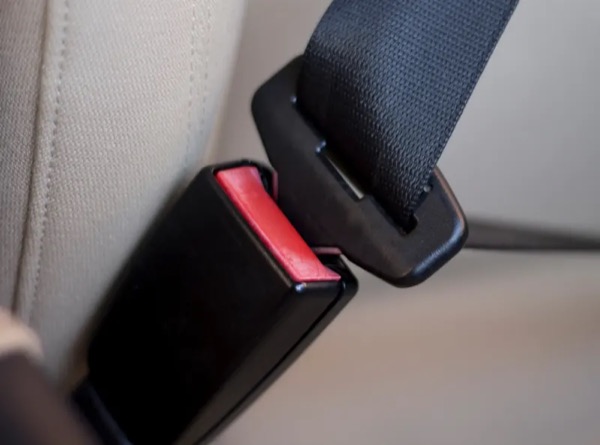
A seat belt is a system of parts that must agree with one another. The latch plate and the receiver are a matched pair. The webbing width has to suit the latch plate slot and any guide loops it passes through. Anchor hardware has to suit both the belt and the mounting point in the vehicle.

Mixing components from different assemblies is one of the most common causes of poor engagement, stiff webbing feed and belts that will not sit correctly. Parts can appear to fit while behaving differently from the way either was designed to behave.

Seat belt latch plate positioned at the mouth of a buckle receiver, with the red release button visible
REF Q2 Latch plate and receiver — a matched pair

Compatibility checkpoints

  • C1Latch plate to receiverDesigned as a pair; engagement and release depend on both halves being the intended parts.
  • C2Webbing to hardwareWidth and thickness must suit the latch plate slot, guide loops and adjuster.
  • C3Anchor to vehicleFixing type, thread and load path must match the mounting point in the vehicle.

4.0
Consistency

Manufacturing consistency

Consistency is the practical expression of quality in manufacturing. It means the hundredth assembly of a run behaves like the first: the same webbing, the same stitch position, the same hardware placement, the same feel at the buckle.

It comes from unglamorous discipline — recording setups so a job can be repeated faithfully, keeping the sequence of operations fixed, and refusing to treat small deviations as acceptable because they are small. Variation that is tolerated becomes variation that grows.

Walk through the production sequence

5.0
Inspection

Inspection

Inspection is most useful when it is close to the work rather than bolted on at the end. Each stage is accountable for the condition of what it passes on, so problems are found near where they were created.

On a finished assembly we look at webbing condition along the working length, stitch blocks for completeness and position, hardware finish for burrs and sharp edges that could damage webbing, and the actual operation of the buckle by hand. Where a dimension affects fitment, it is measured rather than estimated.

Anything that does not pass is physically separated so it cannot rejoin the flow by accident. That sounds obvious; it only works if it is done every time.

6.0
Replacement

Replacement considerations

Seat belts do age. Webbing can fray at the edges, become stiff, get contaminated with oils or cleaning chemicals, or simply lose the smooth feed that makes a belt pleasant to use. Retractors can stop returning webbing fully. Buckles can become reluctant to latch or need more than one attempt.

Any of these is a reason to have the assembly looked at by a competent workshop. A belt that no longer latches cleanly on the first attempt, or that shows visible damage to the webbing, should not simply be lived with.

When replacing, matching matters: the vehicle, the seating position, the fixings already present and the space the assembly has to occupy. Photographs of the existing belt, buckle and mounting points resolve most identification questions immediately.

Replacement seat belts

7.0
Installation

Responsible installation

Seat belt anchor points carry load into the vehicle structure. They are engineered locations, not general-purpose fixing points, and the hardware that connects to them is part of that load path.

We recommend that seat belt fitting and replacement is carried out by a competent automotive workshop. That is not a disclaimer for its own sake — correct torque, correct hardware, correct routing and correct anchorage all matter, and a belt that is fitted approximately is not doing what it was made to do.

For the same reason, this page does not provide step-by-step fitting instructions. Publishing generic installation steps for a safety-critical component, without knowing the vehicle or the mounting arrangement, would not be responsible.

Please note

If a seat belt in your vehicle is damaged, does not retract, or does not latch on the first attempt, have it inspected by a qualified workshop. Do not modify anchorage points, cut or splice webbing, or substitute non-matching hardware.

8.0
Verification

Customer verification

You should not have to take a supplier's word for it. When an assembly arrives, it is reasonable — and we would encourage it — to check it before it goes anywhere near a vehicle.

  • V1Check it matches the enquiryBelt type, length, buckle type and hardware should correspond to what was discussed, not merely to what is available.
  • V2Look along the webbingRun the full working length through your hands. Edges should be intact, the surface even, and there should be no contamination.
  • V3Operate the buckleLatch and release it several times. Engagement should be positive first time and release should take one deliberate press.
  • V4Inspect the stitchingStitch blocks should be complete and sit within the overlap, with no loose or skipped runs.
  • V5Check the hardwareMetal parts should be free of burrs and sharp edges. Adjusters and guide loops should move freely.
  • V6Query anything unexpectedIf something does not look or feel right, contact us before it is fitted. That is a better outcome for everyone than a doubt left unresolved.
Statement  —  Scope of our claims

What we do
not claim.

Plenty of suppliers imply approvals they do not hold. On a safety component that is worse than unhelpful, so we are explicit about the boundary.

Nothing on this website should be read as a claim that our products carry a particular certification, approval or test result. Specifically, we make no claim on this site to hold ISO certification, ECE approval, AIS approval, BIS certification or OEM approval, and we publish no crash test, laboratory test or safety rating results.

We also publish no production capacity figures, factory dimensions, staff numbers, years in operation, export percentages or customer lists. Where we do not have a verified figure, we describe how we work instead of inventing a number.

If your purchase requires documented certification or third-party test evidence, please raise that at the point of enquiry. We will tell you plainly what documentation can and cannot be provided for your requirement, rather than leaving you to assume.

Ask about documentation for your requirement

Next

Questions about a
belt you already have?

Send photographs and the vehicle details. We will tell you what we can identify and what would be appropriate as a replacement.